


Certification vs Degree: What Employers Prefer
Introduction
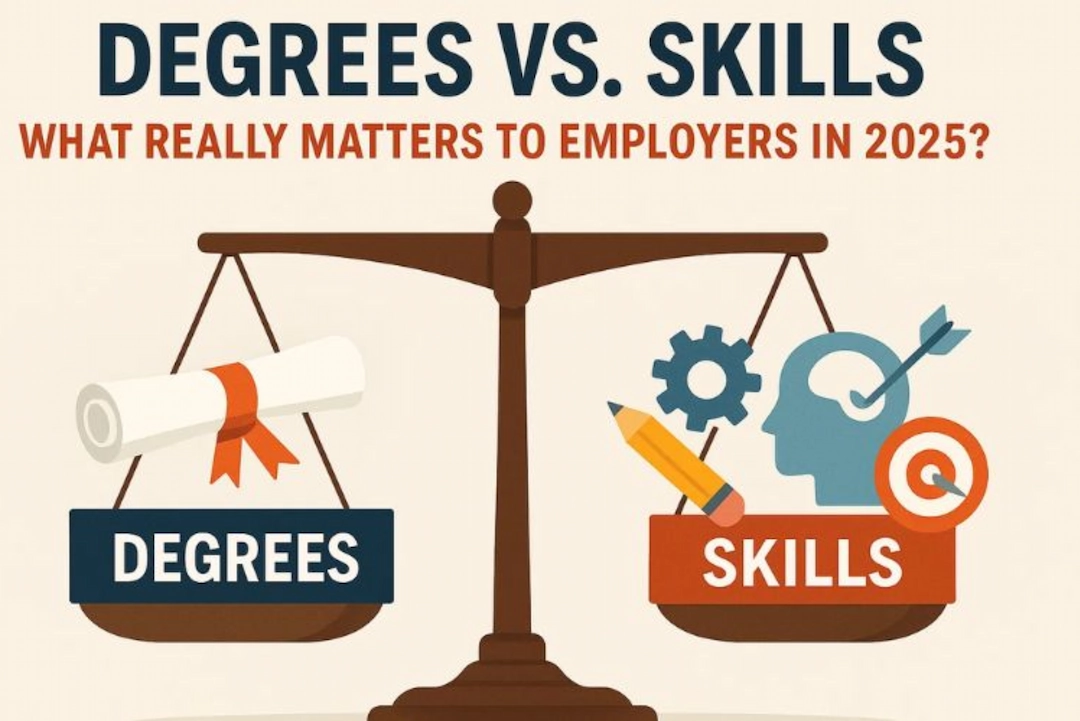
In today’s dynamic job market, the debate between certifications and degrees has gained significant importance. Professionals, students, and job seekers often face the question: “Should I invest in a formal degree or focus on earning certifications?” Both pathways have unique advantages and are recognized differently by employers. To understand which option is preferable, it is crucial to examine the aspects of employability, skills, career growth, cost, and industry trends.
1. Understanding Degrees
A degree is a formal academic qualification awarded by universities or colleges after completing a structured program of study. Degrees typically range from bachelor’s to master’s and doctoral levels. They are often viewed as traditional markers of education and provide a comprehensive understanding of a subject.
                        Key Advantages of Degrees:

                            1. Broad Knowledge Base: Degrees cover theoretical and practical aspects of a field,
                            providing a strong foundation for long-term career growth.
                            2. Structured Learning: Degree programs follow a systematic curriculum, ensuring that
                            students develop a holistic understanding of their domain.
                            3. Credibility: Employers often associate degrees with credibility and perseverance, as
                            completing a degree requires dedication over several years.
                            4. Eligibility for Certain Jobs: Many positions, particularly in government, research, law,
                            medicine, and engineering, require a formal degree.
                            5. Networking Opportunities: Universities and colleges offer exposure to peers,
                            professors, and alumni networks, which can be valuable for career growth.
                        Limitations of Degrees:

                            ● Time-Consuming: Earning a degree can take 3–6 years, which may delay entry into the
                              workforce.
                            ● Cost: Higher education often comes with a significant financial burden, including tuition,
                              books, and living expenses.
                            ● Slow Adaptation to Industry Trends: Traditional degree programs may not always
                              keep pace with rapidly changing industry needs, particularly in technology and digital
                              sectors.
2. Understanding Certifications
A certification is a credential awarded by professional organizations or institutions after completing a specialized course or passing an examination. Certifications are typically skill-focused and aim to enhance specific competencies.
                        Key Advantages of Certifications:

                            1. Skill-Focused: Certifications demonstrate mastery in a particular tool, technology, or
                               domain, making them highly relevant for employers seeking specialized skills.
                            2. Shorter Duration: Certifications often take weeks to months, allowing professionals to
                               quickly upskill or switch career paths.
                            3. Cost-Effective: Compared to degrees, certifications are generally less expensive and
                               offer a high return on investment.
                            4. Industry-Relevant: Certifications are frequently updated to reflect the latest trends,
                               making certified professionals more attractive in fast-paced industries.
                            5. Flexibility: Certifications can be pursued alongside a degree or full-time job, offering
                               flexibility for working professionals.
                        Limitations of Certifications:

                            ● Narrow Scope: Certifications focus on specific skills and may not provide a
                              comprehensive understanding of the broader field.
                            ● Varied Recognition: The value of a certification depends heavily on the issuing
                              organization and industry perception.
                            ● Limited Eligibility for Certain Roles: Jobs in academia, research, and regulated
                              professions often require degrees, making certifications insufficient alone.
3. Employer Preferences: Degrees vs Certifications
Employers consider multiple factors when hiring, including education, skills, experience, and industry relevance. The preference for degrees or certifications depends on the type of role, industry, and organizational needs.
4. Trends Shaping the Future
                    1. Digital Transformation: With the rise of AI, machine learning, cloud computing, and
                       digital marketing, certifications are becoming more relevant for staying updated with new
                       technologies.
                    2. Micro-Credentials: Employers are increasingly valuing short-term certifications and
                       micro-credentials that demonstrate mastery in specialized skills.
                    3. Hybrid Learning: Many universities now offer degree programs integrated with
                       certifications, allowing students to gain both theoretical knowledge and practical skills
                       simultaneously.
                    4. Focus on Lifelong Learning: In a rapidly evolving job market, continuous upskilling
                       through certifications is seen as a key to career sustainability.
5. Cost and Return on Investment (ROI)
Degrees: While expensive, degrees offer long-term credibility and access to a wide range of
career options. The ROI may be slower but often results in stable career growth.
Certifications: Low cost and faster acquisition make certifications ideal for rapid career
advancement and skill-based roles. ROI is immediate but may plateau without additional
experience or qualifications.
Conclusion
The debate between certifications and degrees is not about choosing one over the other but understanding their complementary value. Degrees provide a strong foundation, credibility, and eligibility for structured roles, whereas certifications offer specialized skills, practical expertise, and industry relevance.